

Navigating athletic scholarships can be complex, but understanding the basics can open powerful opportunities for student-athletes. Athletic scholarships vary by division, sport, and institution, ranging from full-ride scholarships that cover tuition, fees, room, and board, to partial scholarships that provide more flexible financial support. This guide breaks down key distinctions between full and partial scholarships, outlines changes introduced by the NCAA settlement model, and details scholarship availability by sport and division. Whether you’re aiming for Division I, exploring NAIA options, or curious about financial aid alternatives, this section provides the foundational knowledge needed to plan your college journey strategically.
Full-Ride Scholarship Offers
A full-ride scholarship typically covers student tuition, fees, room and board, and course-related expenses such as books. If you receive a full-ride scholarship in your first year, it’s important to understand that there is no guarantee it will apply in the following years. Coaches must renew their scholarship annually.
Full-ride scholarships are available at the NCAA Division I level. Under the new NCAA settlement model, schools that have opted in may offer as many scholarships as they want, but must stay within strict roster caps. Previously, schools were limited by the number of scholarships they could offer. Now, they’re limited by the number of players on the roster. With the settlement, programs can offer a full-ride or partial scholarship.
Here’s a breakdown of new roster caps across key Division I sports. Please keep in mind that some programs will be opted into this, and others will not.
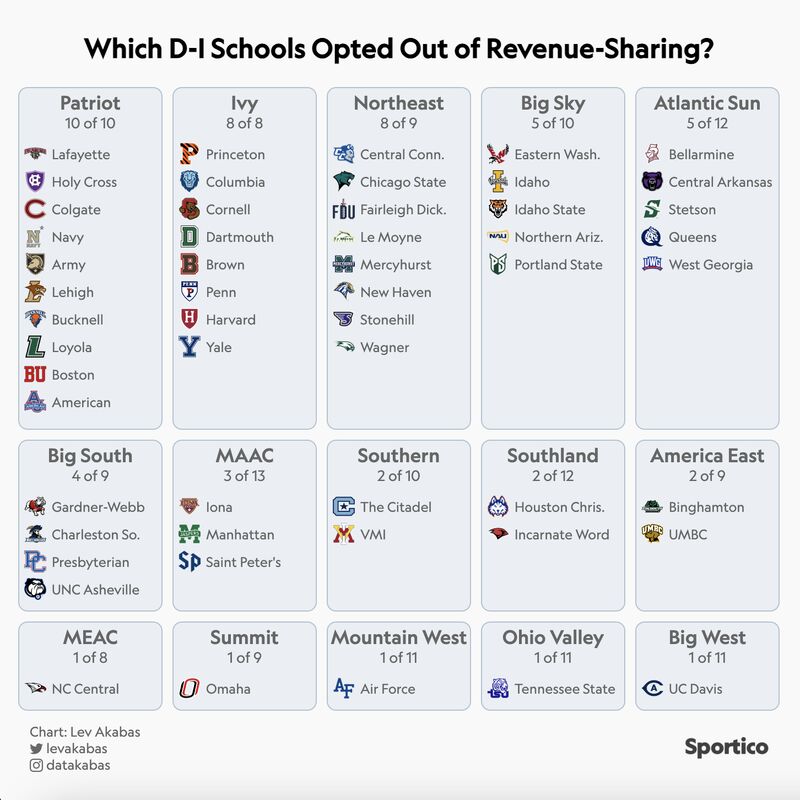
These two numbers are never used together. Schools that opted into the settlement follow the roster cap and have no scholarship limit, while schools that opted out follow the scholarship limit.
| Sport | Scholarship Limit (Schools That Opted Out) | Roster Cap (Schools That Opted In) |
|---|---|---|
| Baseball (M) | 11.7 scholarships | 34 players |
| Softball (W) | 12 scholarships | 25 players |
| Men's Lacrosse | 12.6 scholarships | 48 players |
| Women's Lacrosse | 12 scholarships | 38 players |
| Women's Soccer | 14 scholarships | 28 players |
| Men's Soccer | 9.9 scholarships | 28 players |
| Football (FBS) | 85 scholarships | 105 players |
| Football (FCS) | 63 scholarships | 105 players |
| Women's Volleyball | 12 scholarships | 18 players |
| Gymnastics (W) | 12 scholarships | 20 players |
| Swimming (W) | 14 scholarships | 30 players |
| Swimming (M) | 9.9 scholarships | 30 players |
| Field Hockey | 12 scholarships | 27 players |
| Basketball (M) | 13 scholarships | 15 players |
| Basketball (W) | 15 scholarships | 15 players |
| Track and Field (M/W) | Varies | 45 players each |
| Rowing (W) | 20 scholarships | 68 players |
| Tennis (W) | 8 scholarships | 10 players |
| Tennis (M) | 4.5 scholarships | 10 players |
Programs not opted into the settlement will continue operating under the old scholarship and roster structure. This image, created by Sportico, provides a clear view of what Division I schools have opted out of revenue sharing, which means they do not need to abide by roster limits. (Note: Ivy League schools do not offer athletic scholarships)
How Do I Know Which System a School Uses?
Each Division I school chose whether to opt into the NCAA settlement, and that choice affects how many roster spots and how much scholarship money a program has. We can't list every school's choice here, so here is the best way to find out:
- Ask the coach directly. For example: "Has your program opted into the NCAA settlement, and what does that mean for roster spots and scholarships for my class?"
- Check the school's athletics or compliance website. Some schools post this information there.
- Check the official list. The College Sports Commission, which oversees the new system, publishes a list of the schools taking part. Schools on that list have opted in and follow the roster caps. The list won't tell you how a specific team handles roster spots and scholarships, so still ask the coach.
- Remember the Ivy League exception. Ivy League schools don't offer athletic scholarships either way.
A team uses one system or the other, never both. A program that opted in follows the roster cap and has no scholarship limit. A program that opted out follows the scholarship limit. The two numbers in the table above never apply to the same team.
- Men’s Basketball - Each team has 13 full-ride scholarships available.
- Football (FBS Only) - Each team has 85 full-ride scholarships available.
- Women’s Basketball - Each team has 15 full-ride scholarships available.
- Women’s Gymnastics - Each team has 12 full-ride scholarships available.
- Women’s Tennis - Each team has 8 full-ride scholarships available.
- Women’s Volleyball - Each team has 12 full-ride scholarships available.
Partial Athletic Scholarship Offers
Partial athletic scholarships are athletic scholarships available at NCAA Division I and Division II programs. Division I programs can offer full or partial scholarships
At the Division II level, each team has a specific amount of money to be offered that can be divided among as many players as they want. College coaches can decide how much they want to offer their student-athletes, so some student-athletes may receive more than others. Below is a list of NCAA equivalency sports and the number of scholarships available per sport, broken out by NCAA Division:
Men’s Division I Equivalency Scholarship Limits
This would only be for schools that opted out of the NCAA Settlement.
| Sport | DI Scholarships Available |
|---|---|
| Baseball | 11.7 |
| Cross Country/ Track and Field | 12.6 |
| Fencing | 4.5 |
| Football | 63 (FCS) |
| Golf | 4.5 |
| Gymnastics | 6.3 |
| Ice Hockey | 18 |
| Lacrosse | 12.6 |
| Rifle (Coed) | 3.6 |
| Skiing | 6.3 |
| Soccer | 9.9 |
| Swimming and Diving | 9.9 |
| Tennis | 4.5 |
| Volleyball | 4.5 |
| Water Polo | 4.5 |
| Wrestling | 9.9 |
Women’s Division I Equivalency Scholarship Limits
This would only be for schools that opted out of the NCAA Settlement.
| Sport | DI Scholarships Available |
|---|---|
| Beach Volleyball | 6 |
| Bowling | 5 |
| Cross Country/ Track and Field | 18 |
| Equestrian | 15 |
| Fencing | 5 |
| Field Hockey | 12 |
| Golf | 6 |
| Ice Hockey | 18 |
| Lacrosse | 12 |
| Rifle (Coed) | 3.6 |
| Rowing | 20 |
| Rugby | 12 |
| Skiing | 7 |
| Soccer | 14 |
| Softball | 12 |
| Swimming and Diving | 14 |
| Triathlon | 6.5 |
| Water Polo | 8 |
Men’s Division II Scholarship Limits
| Sport | DII Scholarships Available |
|---|---|
| Baseball | 9 |
| Basketball | 10 |
| Cross Country/ Track and Field | 12.6 |
| Fencing | 4.5 |
| Football | 36 |
| Golf | 3.6 |
| Gymnastics | 5.4 |
| Ice Hockey | 13.5 |
| Lacrosse | 10.8 |
| Rifle (Coed) | 3.6 |
| Skiing | 6.3 |
| Soccer | 9 |
| Swimming and Diving | 8.1 |
| Tennis | 4.5 |
| Volleyball | 4.5 |
| Water Polo | 4.5 |
| Wrestling | 9 |
Women’s Division II Scholarship Limits
| Sport | DII Scholarships Available |
|---|---|
| Acrobatics and Tumbling | 9 |
| Basketball | 10 |
| Beach Volleyball | 5 |
| Bowling | 5 |
| Cross Country/ Track and Field | 12.6 |
| Equestrian | 15 |
| Fencing | 4.5 |
| Field Hockey | 6.3 |
| Golf | 5.4 |
| Gymnastics | 6 |
| Ice Hockey | 18 |
| Lacrosse | 9.9 |
| Rowing | 20 |
| Rugby | 12 |
| Skiing | 6.3 |
| Soccer | 9.9 |
| Softball | 7.2 |
| Stunt | 9 |
| Swimming and Diving | 8.1 |
| Tennis | 6 |
| Triathlon | 5 |
| Volleyball | 8 |
| Water Polo | 8 |
| Wrestling | 10 |
What Does This Mean?
To illustrate how partial scholarships work, consider Division II women’s basketball. According to the chart, Division II teams get a maximum of 10 scholarships to divide across what is typically a 15-person roster. If each scholarship is worth $20,000, then the staff has the option to allocate $200,000 ($20,000 x 10 scholarships) across 15 athletes. They may choose to spread the entire $200,000 evenly across their top 10 recruits, though many coaches will instead opt to spread it more evenly across the entire team.
Realistically, partial scholarships are often split such that a small share of rostered athletes are on full scholarships and a much larger share are on low-to-mid-size scholarships. Therefore, the remaining student-athletes on these teams do not receive any athletic scholarships, but can find tuition assistance elsewhere.
Put Into Perspective
In partial scholarship sports, college coaches can be more strategic with the scholarships they award. They can award a large portion of a scholarship to the highly sought-after recruits and a small portion to the lower-profile, but still valuable recruits. A full scholarship in a partial scholarship sport is rare and should never be expected.
You certainly will see some student-athletes receive a full scholarship, but it is unlikely. These student-athletes are the most heavily recruited and rank the highest on a school’s list. They are also often reserved for certain positions - a football quarterback, a baseball pitcher, etc.
Which Schools Offer Athletic Scholarships?
NCAA Scholarships
NCAA Division I and Division II can give out athletic scholarships. In Division III, there are no athletic scholarships at all. Colleges will replace this athletic aid with financial and merit-based grants. According to the NCAA, 82% of all student-athletes receive some form of academic grant or need-based scholarship.
NAIA Scholarships
The NAIA gives out equivalency athletic scholarships. There is a certain number of scholarships available per sport that can be broken down into smaller scholarships for multiple students. Check out our article NAIA vs. NCAA to learn more about NAIA scholarships.
Ivy League Scholarships
Ivy League schools do not offer athletic scholarships. However, other forms of scholarships and aid are available at these colleges and universities. The Ivy League schools offer academic scholarships, merit-based scholarships, and other forms of need-based financial aid.
How Can You Be Eligible for an Athletic Scholarship?
You will need your NCAA Eligibility Number to be eligible for an NCAA DI or DII scholarship. This number ensures that you are academically eligible and still have your amateur status.
As you narrow down your Target List of Schools and go on official and unofficial visits, you will start discussing the possibility of athletic scholarships. This conversation will usually come up organically with the coaching staff. If it does not, ask the coach for a financial pre-read. With a financial pre-read, coaches can talk to financial aid to see what you will be expected to pay and what you will receive in financial aid, academic scholarships, or merit-based scholarships.
Refrain from bringing up scholarships when you first meet a coach. This is something that the coach will eventually bring up to you as they are preparing to give you an offer.
What Do Athletic Scholarships Cover?
An athletic scholarship could cover your tuition, fees, books, room and board, etc. If you receive a full-ride scholarship, then all of this will be covered. If you receive an equivalency scholarship, it could cover a portion of your college costs.
Do You Need a Scholarship to Be Part of the Program?
You can be part of the roster without being awarded a scholarship. There are usually more spots on the team than scholarships available, as there are roster limits and scholarship limits, depending on the sport or division.
Also, it's important to note that you are not guaranteed a scholarship for all four years if you receive one in your Freshman Year. Your athletic scholarship will be reviewed every year. If you continue to keep up your grades and improve your athletic skills, you will likely continue to receive your athletic scholarship.
When Are Athletic Scholarships Taken Away?
An athletic scholarship can be taken away for a few reasons.
- Underperforming
- Injury
- Coaching Change
- Poor Academic Standing
If you feel like you are at risk of losing your athletic scholarship, it is important to talk to your coaching staff.
What other Aid is Available to Student-Athletes?
As we have discussed, not every student-athlete will receive an athletic scholarship. Most student-athletes will not receive athletic aid. However, there are various other opportunities for student-athletes to receive financial assistance for college. There are academic scholarships, merit-based scholarships, and even need-based scholarships, depending on your college. You are also able to take out student loans.
Learn more about scholarships available and how to pay for college beyond athletic scholarships here.